…..At Symposium To Mark 2025 World Children’s Day
To strengthen the rights of the Nigerian Child, the United Nations Children’s Fund (UNICEF) in partnership with the Nigerian Guild of Editors (NGE) organized a symposium to mark the 2025 World Children’s Day with calls for more deliberate actions to protect the right of children across the country.
The 2025 World Children’s Day with the theme: My Day, My Right’, a global day of action for children is usually observed November 20 and marks the anniversary of the Convention on the Rights of the Child and serves as a call to action for schools, communities, and institutions to engage with and support children.
The symposium with the theme: Equipping the Nigerian Child for the Future: How Prepared Are We? was held at the Lagos Sheraton Hotel, Ikeja on Tuesday, November 25, 2025.
- Advertisement -

Speaking at the event, the Country Representative for UNICEF Nigeria, Wafaa Saeed Abdelatef said Children across Nigeria hope for a good future match Nigeria’s goals and the global promise of the Sustainable Development Goals (SDGs) of education for all, healthcare for every child, an end to poverty and hunger, clean water, gender equality and climate action.
She added that Nigeria’s National Development Plan echoes these priorities, aiming to lift families out of poverty, improve services and build a better future for children.
Saeed disclosed that there has been significant improvement in the country which include more children are growing up healthy, health system has grown stronger and more accessible; vaccination cards are becoming common household items; birth registration numbers have risen since 2016, opening doors for children education, healthcare and other essential services and safety nets are expanding.
“Progress for children in Nigeria shows under five deaths dropped by 43% over the past 34 years from 193 per 1,000 live births in 1990 to 110 in 2023/2024; Infant deaths fell from 87 to 63 per 1,000 live births over the same period; full vaccination coverage for children aged 12-23 months tripled from 13% in 2003 to 39% in 2023/2024; feeding babies under 6 months with only breast milk rose from 2% in 1990 to 29% in 2023/2024 and more women are giving birth with the help of trained health workers from 32% in 1990 to 46% in 2023/2024,” she disclosed.
She said that progress is uneven, adding that while some indicators show improvement, millions of children still lack the basics needed to survive, let alone thrive.
“The gap between policy commitments and lived reality remains wide for many families,” she added.
The UNICEF Nigeria Representative added that even with these improvement, Nigeria still need to do more.
She stated that the progress shows what is possible when the government, international partners, communities, service providers and families work together.
She added that the problem is not just what families lack; it is what systems fail to provide, adding that social protection reaches too few households, especially the poorest.
“Government spending on education, health and social support far too low. The safety nets meant to protect vulnerable children are either weak or missing altogether. Without real investment, millions of children remain stuck in poverty, unable to access the opportunities that could change their lives,” she said.
Speaking on what every child needs no matter the part of the country they live, Saeed said across Nigeria, children dream of futures they may never experience unless the systems and services around them are transformed.
She said that key advocacy to ensure every child in Nigeria can live, learn and grow with dignity and safety improved health and nutrition by reducing the number of zero-dose children by delivering vaccines to every child especially to those in the hardest areas to reach communities; access to education by reducing number of out-of-school children that is by addressing poverty, insecurity and barriers to education; child protection by increasing birth registration to give every child a legal identity and access to services, protection and rights.
Others, she said include climate and water, sanitation and hygiene by drastic reduction of open defecation and access to latrines and shifting community norms; equity and social protection, expand social protection to empower the most vulnerable families and peace, justice and resilience by investing in rebuilding livelihoods, restoring social cohesion and strengthening local economies to help communities recover and thrive in the aftermath of conflict and crisis,” she stated.
She gave assurance of UNICEF’s continued support to the government to achieve the desire of the Nigerian child.
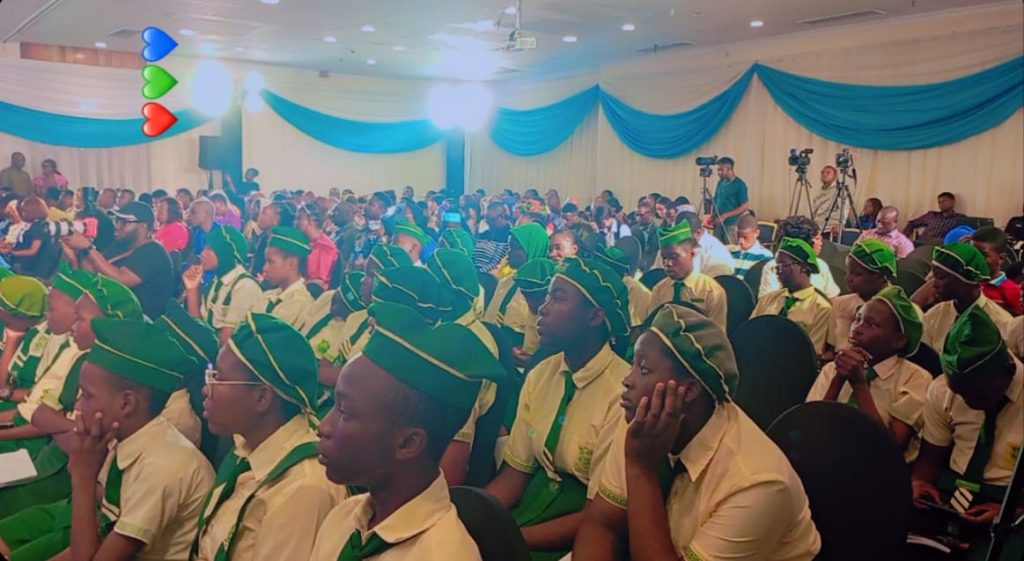
She commended the media for the collaboration, adding that the meeting will make a difference for the Nigerian child and the society at large.
The President, Nigerian Guild of Editors, (NGE) Mr. Eze Anaba urged government on the need to implement and enforce laws that secure children’s right, must invest in robust education and other basic amenities in order for every child to live a life of fulfillment.
He said that millions of Nigerian children are out of school, the highest number in the world with girls disproportionately affected due to poverty, conflicts, cultural norms and lack of basic infrastructure.
He said: “Millions of children under age one are not vaccinated, placing them at risk of preventable diseases. Children across the country continue to endure violence, abuse, child labor and early marriage. In multiple regions, children have been forced into becoming combatants, their innocence and future stolen.
He added that these are not mere statistics but lived experiences of children whose dreams and the country’s future are being derailed.
Anaba said the government’s declaration of a highest level of security alert recently only underscores the reality that these are not normal times.
“Nigeria is in a state of emergency. If we did not know before, we should know now. At no other time in our history, except during the civil war in Nigeria, has the condition of our children been this uncertain.
He disclosed that this is precisely the kind of human suffering the United Nations sought to prevent in 1954 when it dedicated a day to promote and protect the rights and well-being of every child. Yet, 71 years later, the condition of the children, the condition of the Nigerian child has declined so gravely that the very schools meant to nurture future leaders have become centres of war.
To reverse this tragic trajectory, he said the media, civil society, UNICEF, and the government must work together.
He said that UNICEF in the past had partner with the media to deal with the problem of children in Nigeria and with this continued effort, the Nigerian child will acheve what he or she ever dreamt of for the future.
To the media, he said that the constitutional obligation is clear therefore they must be ready to amplify the voices of the voiceless, bringing attention to the daily struggles of children from lack of education to health inequalities and insecurity.
“We must use accurate and verifiable data, working closely with partners like UNICEF to drive evidence-based reporting. We must celebrate successes of child-friendly policies, community-led initiatives and young change makers who are writing their own stories.
“We must embrace solution-based investigative journalism that helps the public and policy makers understand how to fix the problems, not just what they are into the daily realities of children.
“We must continue to generate community-driven solutions, provide child protection and support services, engage families and local leaders and hold institutions accountable.”
He added: “The media should amplify their findings and intervention, ensuring that their work informs national conversations and policy decisions.
Consul General of the Kingdom of the Netherlands in Lagos, Mr. Michel Deelen in his remarks said the celebration is with mixed reaction as regards to what is happening in the country.
He reiterated collaborative effort to change the narrative in Nigeria and to make Nigeria children great.
“I hope that those authorities in charge will make sure that we get back to where we should be with schools, with education, and with an education system that actually delivers the next generation of Nigeria as the future is now,” he added
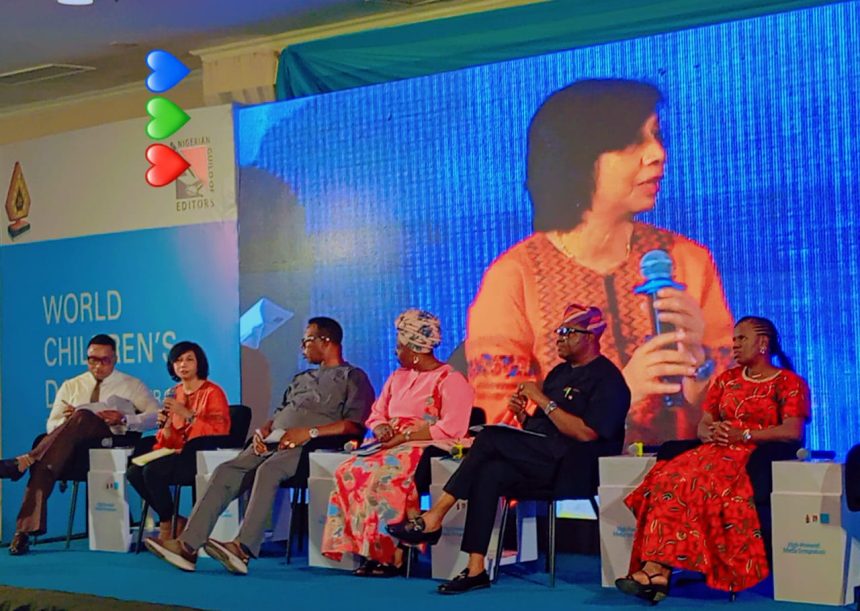
The panelists which include Deputy Representative UNICEF, Rownak Khan, Mariam Fitumi Shaibu of Federal Ministry of Women Affairs, Director Public Communication and National Orientation, National Orientation Agency (NOA), Henshaw Ogubuike, Ehi Ibraimoh and Ijeoma Popoola both of Nigerian Guild of Editors talked extensively on child protection and what needs to be done to have a safe environment for all children in Nigeria.
BV.