…..Wants Govt To Incorporate Mathematical Modelling Into Public Policy
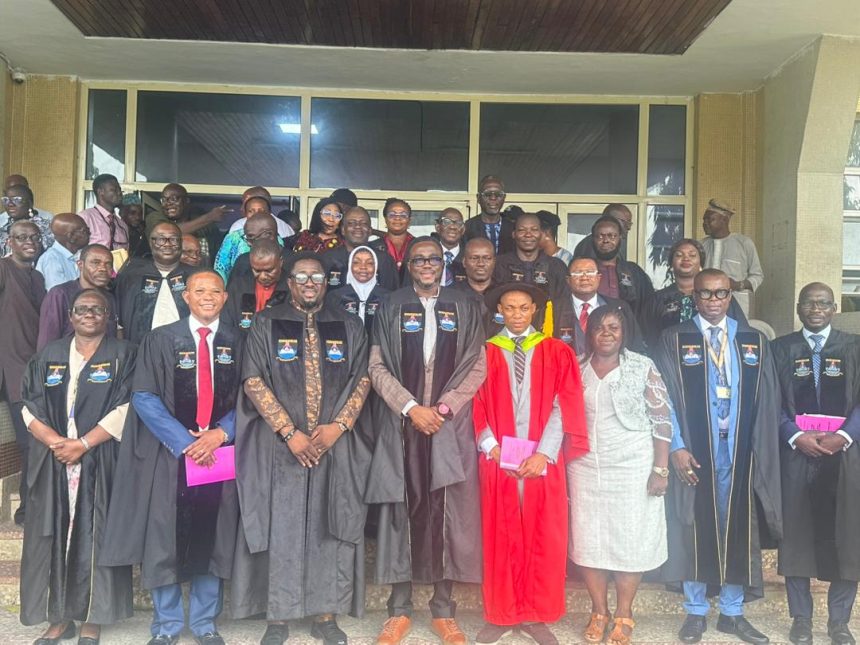
Professor of Computational Mathematics, Department of Mathematics, Faculty of Science, Lagos State University (LASU), Ojo, Professor Moses Akanbi has urged Africans to be creators of mathematical tools that will solve the continent problems rather than consumers of such.
According to him, Africa needs to locally developed solvers for problems like malaria dynamics, hydrological extremes and transportation optimization.
He stated this while delivering the university’s 114th inaugural lecture titled: ‘The Nature of Error: Human Fallibility Versus Divine Infallibility in Computational Thought’ held at the institution on Tuesday.
- Advertisement -

Prof. Akanbi also called on the need for open-access journals and collaborative platforms for African numerical analysts.
“Also the integration of theological perspectives into computational ethics and exploring what it means to model systems with humility and hope,” he added.
He also want the government to incorporate mathematical modelling into public policy.
According to him, decision making must be informed by rigorous simulation and sensitivity analysis, from urban planning to education, forecasting and healthcare.
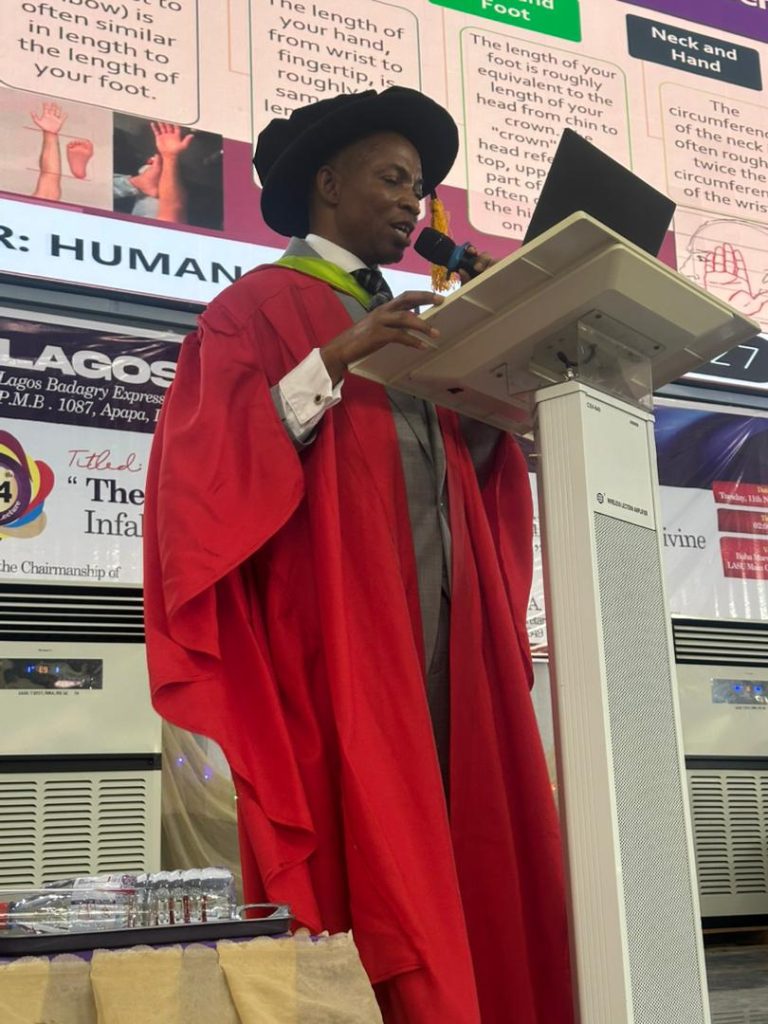
He also called for support for indigenous software development, adding that Nigeria must build its own numerical tools tailored for local needs and contexts especially in education and health.
“Promote mathematical literacy in basic education with mathematics being taught as a language of reasoning, not just a subject to pass.”
He however added that this calls for teacher retraining, curriculum design and civic awareness.
Prof. Akanbi who described mathematics, especially in its computational form, the science of reaching but not arriving said every approximation brings humanity closer to the truth but never to the whole truth.
“Every iteration is a confession we are not there yet and this to me is what makes mathematics not just science but a deeply spiritual pursuit.”
To this end, the lecturer called on the global academics and theological community to foster conversation between faith and computation, adding that there must be forums, journals and conferences where scientists and theologians reflect jointly on divine order and numerical chaos. “It is important to develop a theology of error and promote open science with moral foundation as algorithms govern more aspects of life and we must not let automation outpace accountability.
Prof. Akanbi urged the institution to strengthen mathematical research capacity, establish a centre for numerical modelling and simulation and embed ethical and philosophical components into STEM curricula.
“Students should learn not just how to calculate but how to reflect on truth, purpose and the implications of their models,” he said.
He added that the future of numerical computation is dynamic and interdisciplinary, stating that his work will continue to push towards computational education reform; policy- oriented modelling for government and spiritual reflection in mathematical spaces.
“In Africa, where resources are limited but faith is abundant, this fusion of divine principles and numerical tools can yield a new paradigm of scholarship.
“Through postgraduate supervision, international collaboration, and rigorous publication. I have sought to train the next generation of numerical thinkers while continuing to expand the boundaries of the field.
As I look to the future of my field, I am both hopeful and humbled because mathematics will grow in power, machines will become faster and models will become detailed,” he said.
BV.