…..Enter With Flamboyance, Grounded Too Soon
The Aviation industry in Nigeria seems to be under a siege that is yet to be properly identified. Investing in airlines has confirmed to be one serious challenge. The experience hither to has been that Nigerian airlines enter the aviation sector with flamboyance and celebrations. But, unfortunately they hardly sustain before being grounded. Emmanuel Olisemeke took a cursory look on this industry, and writes:
Global top tycoons say that at the early stages of any business, it is important to establish one’s brand name and position it for growth. However, the disappointing part for most entrepreneurs is that this growth process is quite slow and requires patience, dedication, and a lot of effort.
This slow process, which requires patience and dedication is obviously lacking among most Nigerian investors. It seems that an average entrepreneur in Nigeria intends to recoup his investment almost immediately or at most within maximum of five years after investing his financial resources into a new business.
- Advertisement -

This impatience also seems to be most evident in the aviation industry, especially the airline sub-sector where an airline promoter, in a hurry starts to take from the business almost immediately, not minding the fact that the sub-sector lives on meager resources, though elitist.
Nigerian airlines come with fanfare and tall dreams into the aviation industry, but exit the stage silently without any formal announcement and goodbye messages.
They however leave their once cherished passengers and employees to bear the brunt. While air tickets of passengers who booked for flights hitherto the closure are not refunded, former employees once again, dust their curriculum vitae in search of new jobs and hopefully better ones.
Operators in the airline sub-sector seems frustrated and are exasperated by government policies, cruel operating environment, biting economic recession, heavy reliance on foreign exchange, unprofessional conducts, ownership syndrome, ill-advice from professionals, unwholesome intent of owners, unpreparedness by promoters, diversion of funds by owners, acquisition of wrong equipment, multiple charges and levies, which have perpetually continued to determine their existence.
The then Nigerian Civil Aviation Authority (now Nigeria Civil Aviation Authority) about seven years ago, 2017 to be precise, said that 150 airlines had closed shop within 17 years (2000 – 2017), but there are fears that more airlines would exit the industry as the challenges that usually led to their exit remained unaddressed by the appropriate bodies, while business models of the airlines (existing and dead) have remained the same.
Government policies, laws and business minds need to be changed for progress and sustainability of the sector.
Also, none of the airline promoters; past or present, has come out with sustainable solutions on how to avoid or successfully navigate out of the identified particularly turbulent spots in the industry’s atmosphere.
Not surprising, in 2018, a report rated Nigeria top among countries with the highest number of unserviceable aircraft in global commercial aviation.
From the defunct national carrier, Nigeria Airways Limited, Bellview, Sosoliso, ADC, Fresh, Okada Air, Harco, Albarka, Harka, Slok Air, Argonaut Airlines, Comet Airlines, Fassey Royal Limited, GAS Airlines, Med-View Airlines, Wind Air, Capital Airline, Skyline, Rite Time Aviation, Freedom, Dasab, Savanna, Triax, Chrome, Skypower Express, Premium Air Shuttle, Savannah, Merchant Express, Afrijet, Selcon Airline, Chanchangi Airlines and many others, the story is the same.
The aforementioned airlines at one time or the other dominated the Nigerian aviation industry scene with different brands of aircraft in their fleet and flew to many destinations both within the country and beyond, but today, they are no more, while efforts to resuscitate some of them by their various managements also failed woefully.
The carcass of Okada aircraft for instance, lie fallow at the Benin Airport, while many others like Sosoliso, Hak Air, Air Nigeria, Bellview, Space World, IRS Airlines, EAS Airlines, Dasab, Fresh Air and Capital Air among several other defunct carriers litter the graveyard of the Murtala Muhammed Airport (MMA), Lagos, despite the many threats by the Federal Airports Authority of Nigeria (FAAN) to sell off some of the disused equipment as “scraps” in the past.
The aircraft models range from Fokker 28, Embraer 100 to Boeing 727, 737, B747 and Airbus models. It is now expedient to take a look at some of the defunct airlines in other to observe their failures and offer learnings to existing and prospective operators.
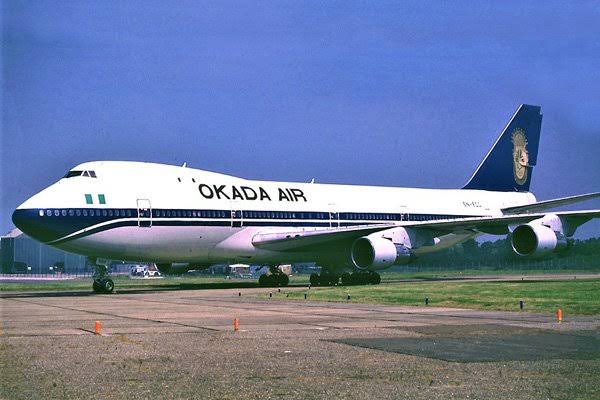
Okada Air
Okada Air was one of the early private airlines in Nigeria when the sub-sector was deregulated by the Federal Government. The new airline had vowed to change the airline operating environment by acquiring B727, BAC 1-11 300s and also a B747.
At the Benin Airport, no fewer than 17 of its 18 BAC 1-11s acquired by the airline’s promoter, Chief Gabriel Igbinedion still clutter the graveyard almost 30 years after the once bourgeoning airline ceased operations.
The abandoned airplanes have been enveloped by the overgrown land around them and the grass within the airport.
However, it must be noted that the government policy of 2002 led to the grounding of the BAC 1-11 aircraft of Okada Air and other airlines with the same brand of aircraft in their fleets.
The government had taken the decision following the accident involving an EAS BAC 1-11 airplane in Gwammaja, Kano on May 4, 2002.
No fewer than 140 lives perished in the accident. The decision to ban the aircraft type in the Nigerian airspace was widely condemned by stakeholders and analysts in the sector.
Apart from the ban placed on the BAC 1-11 aircraft, government also announced a policy banning any leased or acquired aircraft older than 22 years old from being brought into Nigeria.
The measure, which doesn’t prohibit aircraft older than 22 years old already in operations in Nigeria before it clocked the age from being used by operators in the country, still stands till date in the sector.
Okada Air was established in 1983 and had 18 BAC 1-11 300s in its book by 1991. The following year saw the company launch a range of international services, but by 1997 Okada Air had ceased to exist.
Its abandoned jets were subsequently parked up and left to languish at the Benin Airport.
Air Nigeria
Air Nigeria, formerly known as Virgin Nigeria Airways and later Nigerian Eagle Airlines was the national flag carrier of Nigeria, which operated scheduled regional and domestic passenger services.
The airline as Virgin Nigeria was the offshoot of Virgin Atlantic Airways owned by Sir. Richard Branson. At inception in 2004, the airline was positioned to replace the defunct national carrier, Nigeria Airways.
By 2005, Virgin Nigeria operated its first flight – Lagos-London flight. The airline became the first and the only airline in Nigeria to start operations with international operations.
Former President Olusegun Obasanjo as the sitting President had given all his support for the airline and the civil aviation authority in Nigeria gave numerous waivers to the airline. Several international lucrative routes like United States, United Kingdom and others, were reserved for the airline.
Also, the Federal Government approved for the airline to operate its domestic flights from the international terminals of Lagos and Abuja.
But, by 2007 when Late President Umaru Yar’Adua came on board, the government decided to reverse some of the support given to the airline by the former government and also hounded it out of the international wings for domestic operations.
This change in policy did not go down well with Branson who gradually eased out 49 per cent stake in the airline and by 2008, the airline changed name to Air Nigeria.
With this, new investors acquired the airline and Barr. Jimoh Ibrahim became the new Chairman of the airline.
However, this romance and new management did not last as the new investors starved the carrier of funds, depleted its fleet and gradually ran it aground despite Ibrahim describing himself as a “Turnaround expert.”
By September 2012, Ibrahim declared its over 1,000 staff redundant, while the airline stopped operations the same month. This was after the airline had received the sum of N35 billion as loan at single digit interest rates from the bank. Till date, the controversy remained unresolved.
Med-View Airline
Med-View Airline was expected to be a strong example of how an indigenous airline should be managed and run, but like others before it, the airline failed to stand and survive the test of time.
The airline sponsored by Alhaji Muneer Bankole, a former staff of the defunct national carrier, Nigeria Airways and a long-term representative of the airline in Saudi Arabia, started operations in 2007 as a charter airline, operating hajj flights to Saudi Arabia.
However, by November 2012, Med-View Airline, obtained the Air Operator Certificate (AOC) from the Nigerian Civil Aviation Authority (NCAA) to operate as a scheduled airline. Same month, the airline operated its maiden flight to Abuja from Lagos.
Barely two years later, it expanded services to regional routes and by 2016, operated Lagos-London services. Med-View also operated to Jeddah and United Arab Emirates (UAE) within the period.
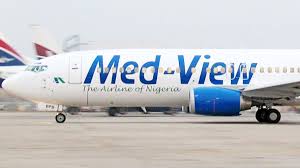
Med-View was the first private airline in Nigeria to acquire and operate the Boeing 777-200 aircraft, using the equipment for its long haul services.
Also, Med-View was the second airline to be enlisted on the then Nigerian Stock Exchange (now Nigerian Exchange Group), after selling its shares to the public. The airline was enlisted on January 31, 2017.
The first airline to be enlisted on the exchange was ADC Airlines, but returned empty handed as the 2006 air accident clipped its wings.
However, international aero-politics, especially from the European Union Aviation Safety Agency (EASA), crippled the expansion drive of the airline. Gradually, the once proud airline reduced fleet and eventually shut operations.
Between November 2017 and mid June 2018, Med-View laid off about 90 per cent of its employees after increasing debts, while it owed about N1.5 billion in salary arrears, pension and other entitlements. Till date, the debts are yet to be paid, while some of its assets have been taken over by the courts for failing to meet its obligations to staff and financial institutions.
By 2019, Medview finally shutdown all operations as its only operating aircraft went out of service and its Saudi Arabian partner also sued the airline in Nigeria, accusing its Nigerian partner of diversion of funds.
Hak Air
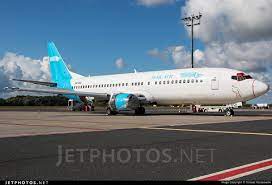
Hak Air promoted by late Capt. Harrison Kuti, the first Nigerian commercial pilot to fly the Boeing 747 aircraft had acquired five B737-400 aircraft in 2012 in preparation for the commencement of scheduled flight operations.
By mid-2013, the NCAA had granted the airline Air Operators’ Certificates (AOC). The AOC was to allow the carrier to deploy its fleet of five ex-Garuda Indonesia (GA, Jakarta Soekarno-Hatta) B737-400s into revenue service following their acquisition a year earlier.
The airline also held rights to Port Harcourt, Omagwa to London Gatwick, but never serviced any of the domestic routes or designated international route until the death of Kuti in May 2020.
In one of the very few interviews Capt. Kuti told the media, he had told our correspondent that the airline’s inability to secure an office space at the Nnamdi Azikiwe International Airport (NAIA), Abuja was responsible for its failure to commence operations as scheduled.
Earlier, the regulatory body, NCAA, had said that the airline will have to return for recertification exercise before it would be allowed to commence scheduled flight operations after two years of being granted AOC.
The NCAA also said that the AOC issued the carrier had become invalid and accused its management of violating the requirements for the issuance of the certificate.
But, Kuti declared that NCAA law on invalidation of AOC only applied to operating airlines, which willingly suspended operations or was suspended by the regulatory agency for safety and other major reasons.
He also argued that what NCAA law stipulated was that any airline, which ceased operations or was forced to stop operations and did not return within 60 days, would be made to go through the same process of acquiring an AOC, maintaining that since it had not commenced operations, it could not be hooked by the law.
Though the controversies generated by the validity of its AOC or otherwise were silently noisy for several years, despite the hullabaloo, Hak Air never took to the sky once.
Its aircraft are still at the graveyard of the Murtala Muhammed Airport, while the demise of its promoter, Capt. Kuti obviously meant the final blow on its resurgence. Hak Air is a typical example of a dream botched before it was hatched.
Slok Air
Slok Air was a peripheral airline in the Nigerian aviation industry. The airline, which was a subsidiary of Slok Group, was promoted by the erstwhile Governor of Abia State and now a Senator of the Federal Republic, Sen. Orji Uzor Kalu, eclipsed its wings controversially in the Nigerian aviation industry in February 2004, barely one month of flying.
The airline, which was incorporated in Nigeria on September 17, 1996, was in June 2005 granted the Air Transport Licence (ATL) by the NCAA, which allows it to offer scheduled passenger flights to airports in Nigeria.
The airline had a month earlier, boasted of acquiring 10 Boeing 737-200 aircraft and promised to commence flight services to 13 Nigerian cities; Lagos, Abuja, Port Harcourt, Owerri, Calabar, Enugu, Benin, Kaduna, Kano, Jos, Yola, Maiduguri and Sokoto, but that dream was short-lived.
By March 2004, NCAA under controversial circumstances suspended the AOC of Slok Air and contradicted itself while giving reason(s) for the grounding of the airline.
At first, the regulatory body claimed that the new carrier acquired two additional aircraft and planned to deploy it for flight services without adherence to laid down rules and safety as the reason for the suspension of its AOC.
It claimed Slok Air ran foul of safety regulations. But, a month later, the then Director-General of NCAA, Engr. Fidelis Onyeyiri (now late), gave another reason for suspending the operations of the airline.
Onyeyiri had claimed that its operating licence was suspended because one of its aircraft landed at Enugu Airport at ground visibility of 1000m against air traffic controllers’ warnings.
The NCAA had said the finding was based on the report of the Nigerian Airspace Management Agency (NAMA), the agency in charge of clearing aircraft for take-off and landing.
According to him, “on March 10, 2004, at 1052 UTC, Slok Airlines B737, aircraft flight No SLB 0404 landed at Enugu Airport when the ground visibility was 1000m.”
But, its promoters, especially Kalu, purported unhealthy politics as the major reason the airline was axed by the regulatory body.
Kalu, a sitting governor of Abia State then, mentioned the “presidency” for the travail of the new carrier.
Before then, Kalu was entangled in a fierce political and image battle with President Olusegun Obasanjo, though, of the same political party – Peoples Democratic Party (PDP).
However, eight months into the suspension of the airline, November 2004 to be precise, its management took the big decision to close shop in Nigeria and relocate its operations to The Gambia.
And hundreds of staff were once again thrown into the labour market. And its assets rot away in the unguarded graveyard of failed airlines in Nigeria.
Bellview Airlines
Many Nigerians and indeed the world would not forget in a hurry the triple accidents that eclipsed the Nigerian aviation industry between 2005 and 2006.
The accident began with Bellview airline on October 22, 2005 with 117 passengers and crew members on board on its Boeing B737-200 aircraft.
The Bellview plane had taken off from Lagos heading to Abuja and it took it just two minutes to disappear from the control tower.
All attempts to get in touch with the aircraft did not succeed, but unfortunately, the aircraft had crashed. It took more than 13 hours before the site of the crash was discovered in Lisa Village, Ogun State.
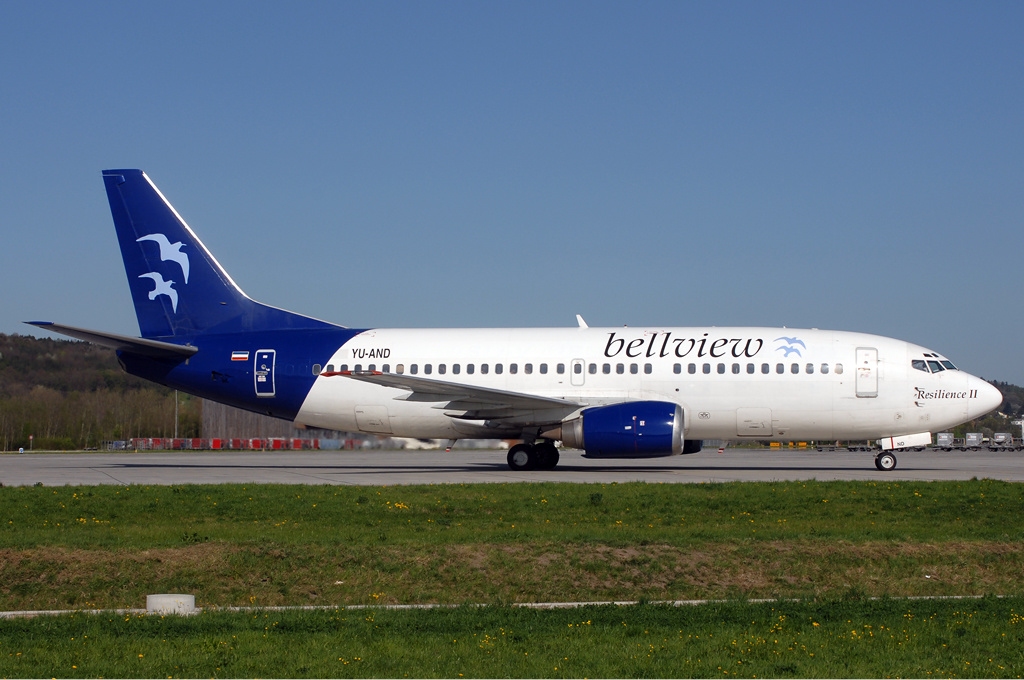
The accident marked the beginning of the end of one of the most promising airlines in the history of Nigeria.
Although, after the accident and the contentious settlements of the families of the dead, the airline remained in business till 2009, but with a series of court cases, aircraft seizures and flight cancellations. The accident had already done its damage.
Bellview Airlines had emerged from Bellview Travels Limited; a Lagos based travel agency, originally concentrating on offering executive charter services using a single Yakovlev Yak-40 aircraft.
After a series of crises, Bellview Airlines transmuted to FirstNation and operated Airbus A319 aircraft, but its existence under the new name was just a flash.
Sosoliso Airlines
Among the triple accidents of 2005 and 2006 was that involving Sosoliso airline; the accident occurred 49 days after the Bellview Airlines crash.
The aircraft, a McDonnell Douglas DC-9 plane crashed before the personnel of the FAAN in Port Harcourt International Airport with 107 passengers on December 10, 2005.
Most of the passengers were burnt alive in the belly of the aircraft as FAAN lacked adequate firefighting equipment in its fire tenders to quench the raging inferno that dwarfed the big bird with explosions.
Most of the victims were school children going home for the Christmas holiday. The aircraft encountered windshear on landing at the airport.
The accident marked the end of the flight operations of the airline as it was unable to pay the mandatory $100, 000 compensations per passenger for the families of the lost souls.
It was also plagued with accusations of carrying fake insurance licenses, documents and spare parts in various quarters.
The airline, which was founded in 1994 and commenced flight operations in July 2000, before the accident had four aircraft in its fleet (two McDonnell Douglas DC-9-30, one McDonnell Douglas MD-81 and one McDonnell Douglas MD-82) and was flying to five destinations, which were Enugu, Port Harcourt, Owerri, Abuja and Lagos.
Chanchangi Airlines
Chanchangi Airlines could be likened to the proverbial cat with nine lives in its heyday. The airline, which commenced flight operations in 2000 really held its own among the Nigerian carriers with effective management and focus.
When aircraft were falling off from the Nigerian airspace and collapsing in droves, Chanchangi never had any major incident that derailed its operations.
At a time in its operation life, Chanchangi had 11 aircraft, majorly B727-200 and B737-200 and dominated the Nigerian sky after the demise of Nigeria Airways and Okada Air.
Until Arik Air danced to the industry with its ‘tear leather’ slogan in 2007, no airline could match Chanchangi Airline in terms of spread and reach, but when observers and key industry watchers thought the fleet would grow, change of management gradually eclipsed its wings and depleted the fleet until it flew the last flight out of the industry.
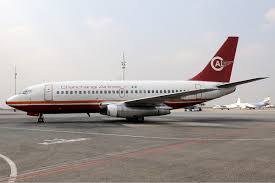
The airline with its headquarters in Kaduna State, struggled to remain in business with the leasing of one Jordanian Airline plane in order to hold on tightly to its OC.
It continued to operate skeletal services to Abuja and Kaduna routes until 2012 when it finally closed shop.
Albarka Air
Albarka Air, the airline, which was owned by the former Military Administrator of Lagos State, Gen. Buba Marwa and the Chairman of the National Drug Law Enforcement Agency (NDLEA), came into limelight in 1999 and commenced flight operations in March 2000, but stopped all flight services in 2005.
Within its short spell in the industry, it operated scheduled and charter services across Nigeria and charters to other countries in Central and West Africa.
Although, throughout its flying years, it never encountered any accident or major incident, but the airline did not also make much impact on the scene with its two B727-200 aircraft and one B737-200 airplanes. It was therefore not surprising that it exited the radar in 2005 without notice.
Skypower Express Airways
The airline was established in 1985 and Capt. Mohammed Joji, the former Managing Director of the defunct Nigeria Airways and Chairman of Airline Operators of Nigeria owned 85 per cent; Dr. Sale Joji, five per cent; Alhaji Danjuma, five per cent and J. Maina with another five per cent.
As at August 2006, the airline had three aircraft in its fleet before it disappeared from the Nigerian sky and reportedly moved to another neighbouring African country.
Skyline (Nigeria)
Skyline operated charter and scheduled domestic passenger services since its commencement of flight operations in June 1999.
As at January 2005, it only had one Dornier 228-100 aircraft in its fleet and silently faded away from the sky without any aviation stakeholders feeling its
Freedom Air
Freedom Air Services airline was established on 28 May, 1998 and started operations in October 2001. It was owned by a group of people including Garba Kabo Shitu, Moh Garba Shittu and Yusufu Garba Shittu.
Before it stopped operations in 2005, it operated domestic flight services to Abuja, Kaduna, Kano, Lagos and Maiduguri. As at 2005, it had three Boeing 727-200 aircraft in its fleet.
Merchant Express Aviation Cargo
Merchant Express Aviation Cargo operated as a cargo airline with Boeing 707 aircraft and flew just in the 1990s. Just like many other cargo airlines from around the world, the company gave the venerable 707 jet another chance to fly for a company.
Competition from such European cargo airlines like Cargo Lion, Cargolux and Germany’s DHL combined with the poor economic situation of Nigeria during the time to precipitate the cargo airline company’s demise before the year 2000.
Fresh Air
Fresh Air collapsed because it didn’t meet the deadline of April 30, 2007 for all airlines operating in the country to re-capitalise or be grounded, in an effort to ensure better services and safety.
Dasab Airlines
Dasab Airlines fell because it could not meet up with the same deadline and it had to stop operations.
Premium Air Shuttle and Savannah Airlines.
Same fate also befell Chrome Air Service, which only had one aircraft in its fleet as at the time of the deadline and could not recapitalise Premium Air Shuttle and Savannah Airlines.
Afrijet
Afrijet as a cargo company operated profitably and even had a solid partnership with a foreign cargo company, until it decided to venture into scheduled air services, which brought an end to its operations.
Within its short spell as a passenger air service, it was enmeshed in various managerial crises involving Alhaji Muhammed Tukur (former manager at Chanchangi Airline) and other management staff.
The management tried frantically to return it to operations, but could still not spread its wings over four years when it last flew.
Stakeholders Reaction
Engr. Chinedu Udoh, aviation expert, mentioned lack of transparency, financial discipline, ownership structure and lack of cooperation among airlines in Nigeria as some of the reasons responsible for their early collapse.
He also explained that business models of some of the airlines were wrong, stressing that rather than operate regional or international routes, some of the carriers should be a feeder to their counterparts on the continent.
Udoh, further noted that lack of adequate availability of Jet A1 and Maintenance Repair and Overhaul Facilities (MROs) for the Nigerian carriers, contributed to the early demise of airline operators in the country.
He said: “The problem with Nigerian airlines is the lack of transparency with ownership management structure. Two, we need financial discipline that will be independent from ownership structure and thirdly, the aim should be for everyone to have exclusivity in its module of operations.
“You don’t have to do West Coast, international as the case may be. Some should even be feeders. Look at what is happening to Asky and Ethiopian Airlines. Today, you can fly from Lagos to New York through Asky to Lome and Ethiopian Airlines to the United States with their joint operations.”
Additional to the views of Udoh, in the opinion of Ayoola Razaq, another aviation stakeholder, said that Nigerian currency was weak when compared to other countries within the continent, stressing that the sector is dollar-based, while operators sell tickets in naira.
He noted that the network may not bring immediate profit, but will help to reduce cost of operations and increase outreach.
Group Capt. John Ojikutu (rtd), the Chief Executive Officer (CEO) of Centurion Security Services, also, mentioned political interference for the death of some of the airlines in Nigeria.
Besides, unlike in Nigeria, he said carriers in Europe and America are in the stock markets, which further ensured stability in their operations.
“The same thing with Ethiopian Airlines. The Ethiopian airlines may not be on the stock exchange, but it has political stability. If you don’t have political stability, in a country where an airline is being run by the government, that airline is gone. That is the situation I think we are in.
Ojikutu also mentioned lack of MRO and unstable naira as some of the challenging militating growth in the sector in the country.
BV.